
AGENTWORLD X SUPERDARK FACTORY
Antikythera x Disintegrator
A double-lecture by Benjamin Bratton (Antikythera) and Marek Poliks (Disintegrator) will examine the coming world of trillions of agents and fully automated agentic systems will reconfigure society.
Gray Area / Grand Theater
Doors 18:30
San Francisco
September 11 2026

What is Agency? Placebo Culture, Agency Theater, Agentic AI
Benjamin Bratton
Imagine a world with 8 billion human minds and a trillion non-human, human-level AI minds. With such ratios, what is a “society”? Agentworld, a new Antikythera research unit, investigates new frameworks for understanding, modeling and composing the medium-term future of hybrid human-AI societies.
Central Saint Martins, UAL
July
London
2026
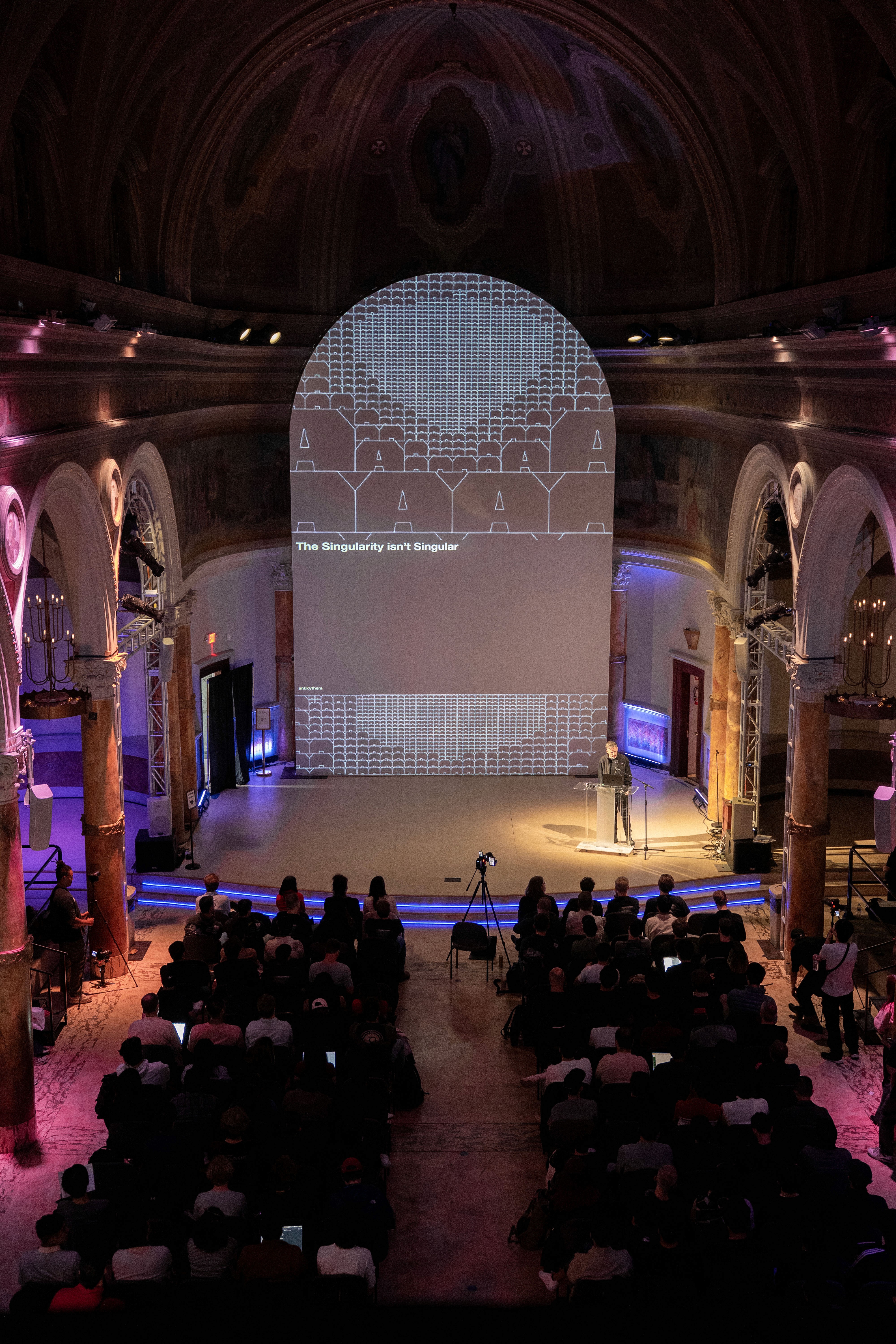
The Singularity Will Not Be Singular
Benjamin Bratton
The present moment is characterized by technologies that have outpaced our concepts, necessitating new conceptual frameworks. Diffusionism holds that the long-term impact of making functional general intelligence widespread, inexpensive, and accessible will be overwhelmingly positive, yet disruptive. This widespread machine intelligence will challenge entrenched institutions and concentrated cathedrals of power.
The Melody Church
March
San Francisco
2026
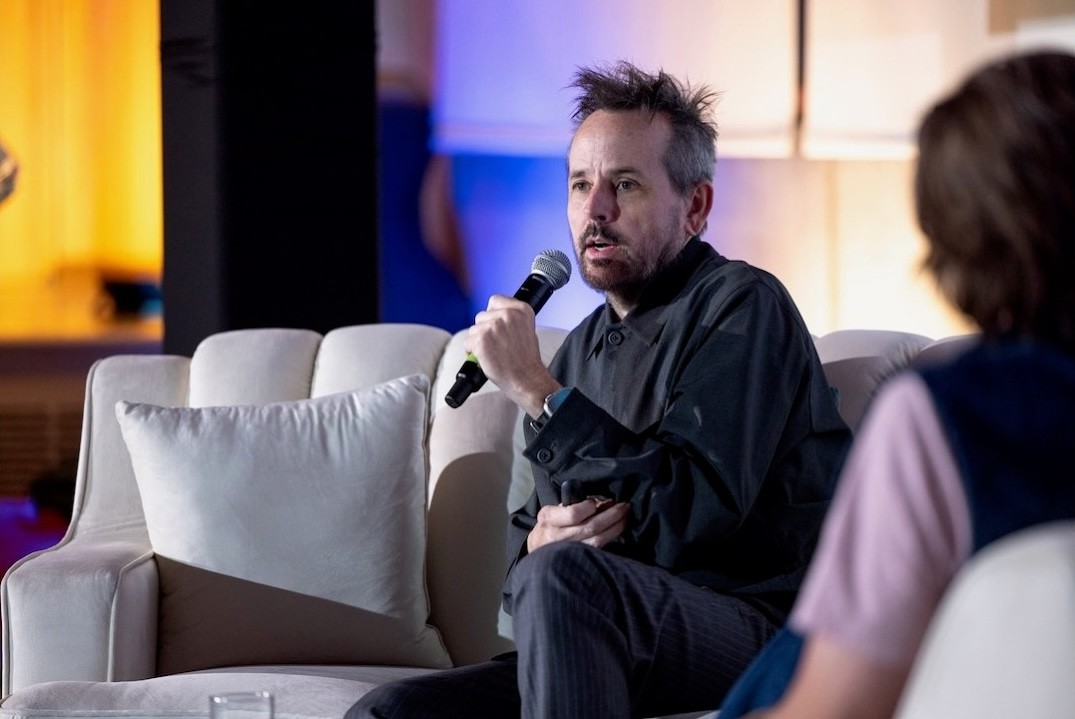
PLANETARY INTELLIGENCE. ARTIFICIALITY SUMMIT 2025
Benjamin Bratton
Artificialization isn't the opposite of nature-it's something life does. Every species that transforms its environment is artificializing, and evolution actively selects for it. This reframing collapses the fiction of a clean divide between nature and culture, biology and technology, and opens up a fundamentally different way of understanding the current Al moment: we are now artificializing the engine of artificialization itself-intelligence.
The Artificiality Institute
2026.03
AGENTWORLD X SUPERDARK FACTORY
Antikythera x Disintegrator
A double-lecture by Benjamin Bratton (Antikythera) and Marek Poliks (Disintegrator) will examine the coming world of trillions of agents and fully automated agentic systems will reconfigure society.
Gray Area / Grand Theater
Doors 18:30
San Francisco
September 11 2026
What is Agency? Placebo Culture, Agency Theater, Agentic AI
Benjamin Bratton
Imagine a world with 8 billion human minds and a trillion non-human, human-level AI minds. With such ratios, what is a “society”? Agentworld, a new Antikythera research unit, investigates new frameworks for understanding, modeling and composing the medium-term future of hybrid human-AI societies.
Central Saint Martins, UAL
July
London
2026
The Singularity Will Not Be Singular
Benjamin Bratton
The present moment is characterized by technologies that have outpaced our concepts, necessitating new conceptual frameworks. Diffusionism holds that the long-term impact of making functional general intelligence widespread, inexpensive, and accessible will be overwhelmingly positive, yet disruptive. This widespread machine intelligence will challenge entrenched institutions and concentrated cathedrals of power.
The Melody Church
March
San Francisco
2026
PLANETARY INTELLIGENCE. ARTIFICIALITY SUMMIT 2025
Benjamin Bratton
Artificialization isn't the opposite of nature-it's something life does. Every species that transforms its environment is artificializing, and evolution actively selects for it. This reframing collapses the fiction of a clean divide between nature and culture, biology and technology, and opens up a fundamentally different way of understanding the current Al moment: we are now artificializing the engine of artificialization itself-intelligence.
The Artificiality Institute
2026.03